

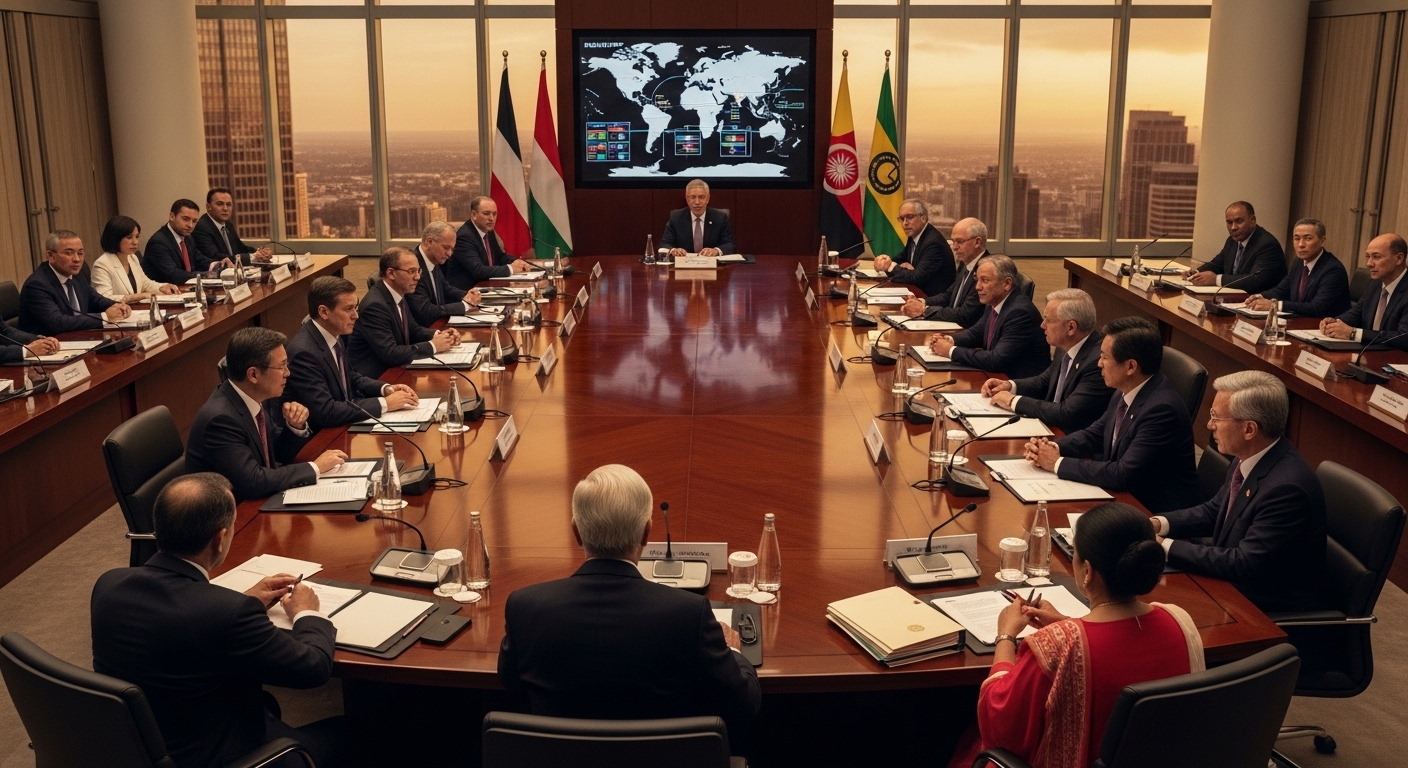
World leaders recently gathered at major international forums to discuss rising global economic pressures and growing security challenges. The meetings focused on inflation control, trade stability, geopolitical tensions, cyber threats, and military cooperation. These discussions reflect increasing concerns about global stability as nations attempt to balance economic recovery with international security demands.
Global Economic Coordination Talks
Inflation Control Strategies
International Monetary Fund emphasized coordinated global strategies to manage rising inflation affecting both developed and developing economies. Leaders discussed interest rate policies, supply chain stability, and fiscal discipline. The goal is to reduce economic volatility while supporting sustainable growth across interconnected global markets.
Trade Stability Agreements
Countries under the World Trade Organization framework worked to strengthen trade stability and reduce barriers affecting global supply chains. Leaders highlighted the importance of predictable trade policies to ensure economic recovery. Discussions included tariff reductions, export regulations, and fair competition rules to support international commerce.
Debt Crisis Management
Many developing nations raised concerns about rising sovereign debt levels. Leaders discussed restructuring solutions and financial support mechanisms to prevent economic collapse in vulnerable countries. International institutions proposed long-term repayment frameworks and financial aid programs to stabilize struggling economies.
Energy Price Coordination
Global leaders addressed volatile energy prices affecting inflation and industrial production worldwide. Discussions focused on stabilizing oil and gas markets, increasing renewable energy investment, and improving energy security cooperation among producing and consuming nations.
Global Investment Flows
Leaders examined declining foreign direct investment in uncertain economic conditions. Policies were discussed to restore investor confidence, improve regulatory transparency, and encourage long-term capital inflows into infrastructure and technology sectors.
International Security Concerns
Geopolitical Tensions Increase
Rising geopolitical tensions between major powers were a central topic in discussions. Leaders emphasized diplomatic dialogue and conflict prevention strategies to avoid escalation that could disrupt global stability.
Military Cooperation Agreements
Several nations strengthened defense partnerships to enhance regional security. Agreements focused on joint military training, intelligence sharing, and coordinated response strategies to emerging threats.
Border Security Challenges
Countries facing regional conflicts discussed border security improvements to prevent illegal crossings, smuggling, and armed conflicts. Technology-driven surveillance systems and cooperation frameworks were highlighted.
Terrorism Threat Prevention
Global leaders reaffirmed commitments to counter-terrorism operations. Intelligence sharing and coordinated law enforcement efforts were emphasized to prevent extremist activities and protect civilian populations.
Peacekeeping Mission Expansion
International organizations discussed expanding peacekeeping missions in conflict-affected regions. These efforts aim to stabilize fragile regions and support humanitarian operations.
Cybersecurity and Digital Threats
Rising Cyber Attack Risks
Microsoft highlighted increasing global cyber threats targeting governments, businesses, and critical infrastructure. Leaders discussed strengthening digital defense systems and improving cybersecurity collaboration.
Data Protection Policies
Countries are working on stricter data protection laws to safeguard sensitive information. Discussions focused on cross-border data regulations and privacy standards.
Digital Infrastructure Security
Governments emphasized securing digital infrastructure such as power grids, communication networks, and financial systems from cyber attacks.
AI Driven Security Systems
AI technologies are being deployed to detect and prevent cyber threats in real time, improving response speed and accuracy.
International Cyber Cooperation
Global cybersecurity alliances are being strengthened to ensure faster response to cross-border cyber incidents and coordinated defense strategies.
Global Military and Defense Discussions
Defense Budget Planning
Countries reviewed defense spending priorities to strengthen military readiness while balancing economic constraints. Investment in modern defense systems and technology was emphasized.
Arms Control Negotiations
International leaders discussed arms reduction agreements aimed at preventing escalation of global military tensions and promoting long-term peace.
Regional Conflict Resolution
Diplomatic efforts were focused on resolving ongoing regional conflicts through negotiation, mediation, and international pressure.
Military Technology Advancement
Advanced defense technologies including drones, missile defense systems, and AI-based surveillance tools were key topics of discussion.
Strategic Alliances Strengthening
Nations reinforced strategic alliances to improve collective security and ensure mutual defense support in case of conflict.
Climate and Resource Security
Energy Resource Competition
Leaders discussed competition over natural resources such as oil, gas, and critical minerals essential for technology and defense industries.
Water Security Challenges
Water scarcity in several regions was identified as a growing security risk requiring international cooperation and resource sharing agreements.
Food Security Risks
Global food supply concerns were addressed, particularly in regions affected by conflict, climate change, and trade disruptions.
Climate Related Migration
Environmental changes are contributing to migration pressures, creating new security and humanitarian challenges for governments worldwide.
Sustainable Resource Management
Leaders emphasized the need for sustainable resource use to prevent future conflicts and ensure long-term global stability.
Future Global Cooperation Outlook
Strengthening Multilateral Institutions
International organizations are expected to play a stronger role in coordinating global economic and security policies.
Diplomatic Conflict Prevention
Early warning systems and diplomatic engagement are being prioritized to prevent conflicts before they escalate.
Technology Driven Security Systems
Advanced technologies such as AI and satellite monitoring will enhance global security coordination and threat detection.
Economic Security Integration
Economic and security policies are increasingly interconnected, requiring coordinated global decision-making.
Long Term Peace Strategies
Leaders emphasized building long-term peace through diplomacy, development aid, and international cooperation frameworks.
Why do world leaders discuss economic and security issues together?
Because economic stability and security are interconnected and affect global peace.
Which organizations help coordinate global economic discussions?
Institutions like the International Monetary Fund and World Bank play key roles.
What are the main security concerns today?
Cyber threats, regional conflicts, terrorism, and military tensions are major concerns.
How does cybersecurity affect global security?
Cyber attacks can disrupt economies, governments, and critical infrastructure.
Can international cooperation prevent conflicts?
Yes, diplomatic engagement and alliances can reduce the risk of global conflicts.
World leaders continue to address complex global challenges where economic stability and security are deeply connected. While discussions highlight rising tensions and financial pressures, they also emphasize cooperation, diplomacy, and technological solutions. The future of global stability depends on coordinated international efforts to manage risks, strengthen economies, and maintain peace across interconnected nations.
