

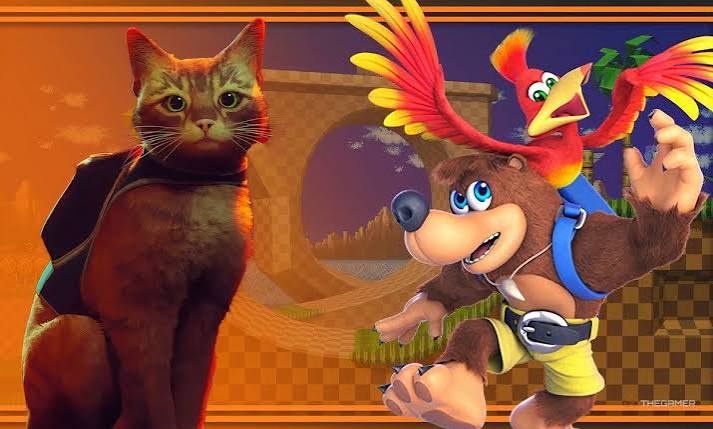
Animal characters work unusually well in digital racing games because they turn a simple competition into an instantly readable spectacle. A player may not remember the name of every racer, but they will probably remember the smug fox, the charging bull, or the nervous-looking chicken trying to keep pace.
That clarity matters in Animal Racing, where the entertainment often comes from following several competitors at once. The animals do more than decorate the track—they give each racer a visual identity, suggest a personality, and make an otherwise straightforward race feel like a miniature sporting event.
Animals Communicate Character Before the Race Begins
Human characters often need costumes, dialogue, or backstories to establish who they are. Animals arrive with cultural associations already attached: foxes appear cunning, turtles seem patient, rabbits suggest speed, while bears tend to look powerful even when they are standing still.
Designers can play with those expectations or deliberately reverse them. A sleepy-looking sloth may suddenly sprint ahead, while the supposedly speedy hare falls behind, creating a small visual joke without needing a single line of dialogue.
This kind of shorthand gives Animal Racing an immediate sense of character. The audience understands the cast within seconds, leaving more attention for the race itself.
Distinct Silhouettes Make the Action Easier to Follow
Racing games can become visually confusing when competitors look too similar, especially on smaller mobile screens. A lineup of nearly identical cars, horses, or human runners may blur together once the movement begins.
Animals solve that problem through shape, scale, color, and movement. Long ears, curled tails, horns, wings, and different running styles remain identifiable even when several racers crowd the same part of the track.
The benefit is practical as much as artistic. Viewers can quickly locate the racer they are watching without relying entirely on labels, numbers, or interface markers.
Personality Turns a Simple Race Into a Story
Most digital animal races follow rules that can be understood almost immediately: the competitors start together, move toward a finish line, and one crosses first. The mechanics may be simple, but the characters encourage the audience to invent stories around what is happening.
A penguin wobbling into an early lead feels like an underdog moment. A confident tiger slipping behind can resemble a favorite losing momentum, even though the animation does not reveal anything about how the result was determined.
These imagined narratives give each race a beginning, tension, and payoff. The personality belongs to the presentation, however, not to the mathematics underneath it.
Humor Makes Losing Sight of the Rules Less Likely
Animal racers can stumble, flap, bounce, or celebrate in ways that would look exaggerated on realistic human characters. Their cartoon logic creates room for comedy without breaking the visual world of the game.
Humor also softens the seriousness of competition. A dramatic finish between a duck and a rhinoceros feels more like a playful spectacle than a simulation pretending to measure athletic skill.
That light tone explains part of the broad appeal of Animal Racing. It can resemble a short animated show, a carnival race, and a spectator game all at once.
The Race Feels Exciting Because It Is Easy to Read
Complex rules are not always necessary for suspense. A visible finish line, changing positions, and a clear leader provide enough information for the audience to understand what is at stake from moment to moment.
Animal characters strengthen that tension because each competitor remains recognizable throughout the movement. When a familiar racer surges forward near the end, the change feels dramatic even if the race lasts only a brief time.
Appearance and previous performance should not be treated as predictive signals. A fast-looking animal, a memorable animation, or a recent first-place finish does not provide reliable information about what will happen in the next independently determined race.
