

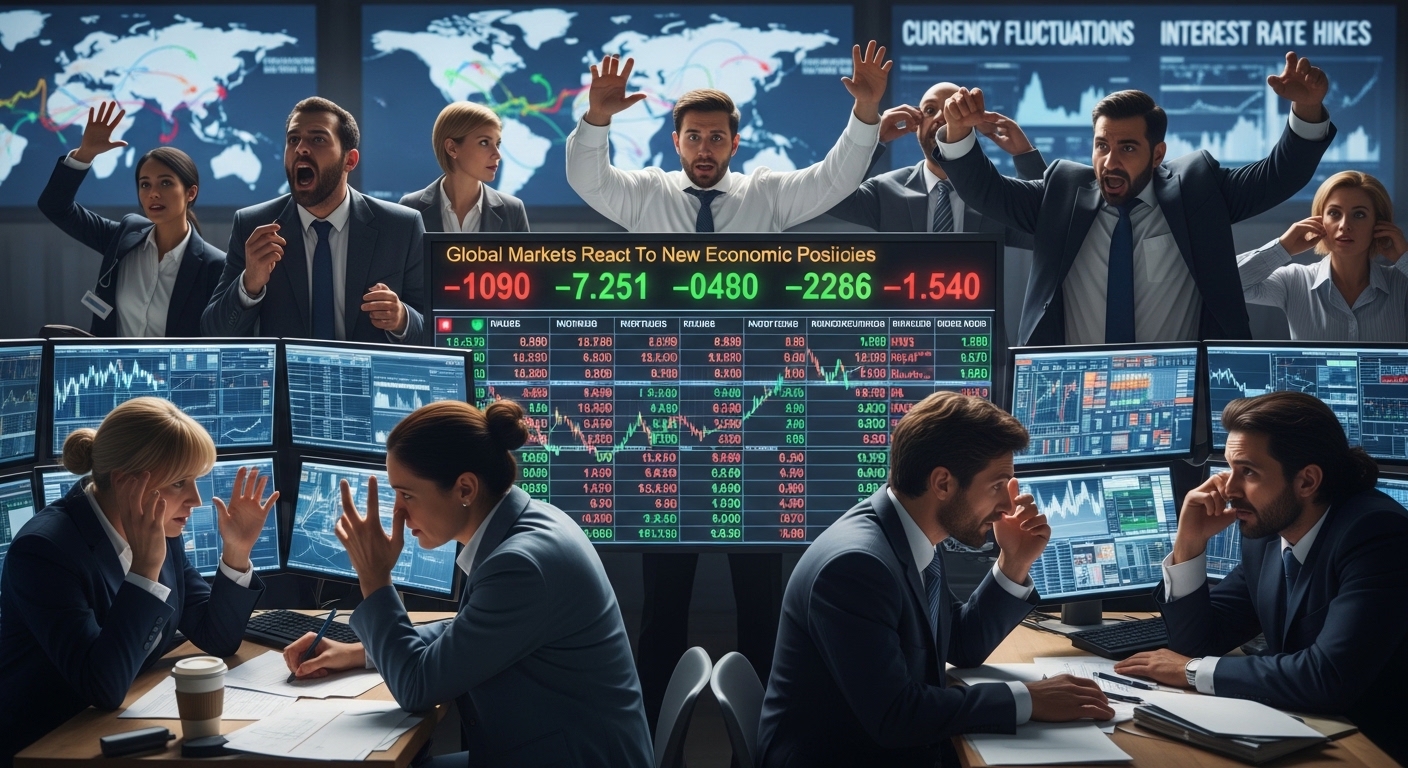
Global financial markets have shown strong reactions following the announcement of new economic policies introduced by major governments worldwide. Investors, businesses, and financial institutions are closely analyzing policy changes affecting inflation control, taxation, trade, and monetary regulation. These developments are influencing stock prices, currency values, and overall market confidence across global economies.
Stock Market Reactions
Equity Market Volatility Increase
Global stock exchanges such as those influenced by S&P 500 experienced increased volatility after new economic policy announcements. Investors reacted quickly to changes in interest rate expectations and tax reforms. This uncertainty led to short-term fluctuations as traders adjusted portfolios based on revised economic forecasts.
Investor Sentiment Shifts
Market sentiment shifted rapidly as investors reassessed risk levels following policy updates. Optimism increased in sectors expected to benefit from government spending, while caution grew in industries facing higher taxation or regulation. Financial analysts noted mixed reactions across global equity markets depending on regional economic exposure.
Technology Sector Response
Technology-heavy indices like NASDAQ Composite reacted sharply to economic policy changes affecting interest rates and innovation funding. Tech companies are sensitive to borrowing costs and regulatory environments, making this sector particularly responsive to macroeconomic announcements.
Banking Sector Performance
Banking stocks saw movement as financial policies influenced lending rates and credit conditions. Investors evaluated potential profit changes for major financial institutions under new regulatory frameworks. Banks in developed economies showed stronger resilience compared to emerging market institutions.
Emerging Market Stock Fluctuations
Emerging market equities experienced significant reactions due to currency pressure and foreign investment shifts. Investors often reallocate capital toward stable economies during policy uncertainty, affecting stock performance in developing regions.
Currency Market Movements
US Dollar Strength Changes
The U.S. Dollar Index fluctuated as traders responded to interest rate expectations and fiscal policy updates. Stronger economic policies tend to support currency strength, while uncertainty can weaken investor confidence temporarily.
Foreign Exchange Volatility
Currency markets experienced increased volatility as global traders adjusted positions based on new economic directions. Exchange rates between major currencies such as USD, EUR, and JPY shifted rapidly in response to policy announcements.
Emerging Currency Pressure
Developing country currencies faced pressure as investors moved capital toward safer assets. This often leads to depreciation in local currencies, increasing import costs and inflation concerns in those economies.
Central Bank Response Expectations
Markets began anticipating possible responses from central banks regarding inflation control and monetary tightening. These expectations influenced currency trading strategies globally.
Trade Balance Implications
Currency fluctuations also affected international trade balances, making exports more competitive in some regions while increasing import costs in others.
Bond and Interest Rate Markets
Government Bond Yield Changes
Bond markets reacted to fiscal policy adjustments with shifts in government bond yields. Investors reassessed risk levels and inflation expectations based on new economic directions.
Interest Rate Forecast Adjustments
Expectations of future interest rate changes influenced bond pricing and investment decisions. Higher interest rate forecasts typically lead to lower bond prices.
Corporate Bond Market Stability
Corporate bonds showed mixed performance as investors evaluated company resilience under new tax and regulatory conditions. Strong companies maintained stability while weaker issuers faced higher risk premiums.
Inflation Expectation Impact
Inflation expectations played a major role in bond market movements, with investors adjusting portfolios to protect against potential price increases.
Long Term Investment Rebalancing
Institutional investors began reallocating long-term bond portfolios to balance risk and return under changing economic conditions.
Commodity Market Response
Oil Price Fluctuations
Global oil prices reacted to economic policy changes affecting demand expectations and industrial activity forecasts. Energy markets remain highly sensitive to global economic shifts.
Gold Market Stability
Gold prices often increased during periods of uncertainty as investors seek safe-haven assets. Economic policy changes typically influence gold demand patterns.
Agricultural Commodity Trends
Agricultural markets experienced changes based on trade policies, currency movements, and production cost expectations, affecting global food pricing.
Industrial Metal Demand
Metals like copper and aluminum saw price adjustments due to expected changes in infrastructure spending and industrial activity.
Energy Sector Adjustments
Energy markets responded to policy-driven changes in production incentives, environmental regulations, and global demand forecasts.
Business and Corporate Impact
Corporate Investment Decisions
Companies began reassessing investment strategies based on new tax structures and regulatory environments. Many firms paused expansion plans until market stability improves.
Employment Market Adjustments
Businesses evaluated hiring strategies due to changes in operational costs and economic uncertainty. Some sectors slowed recruitment temporarily.
Supply Chain Reorganization
Global supply chains adjusted to new trade policies and cost structures, impacting production and distribution strategies worldwide.
Profit Margin Pressure
Companies faced pressure on profit margins due to rising costs and regulatory changes, leading to strategic cost-cutting measures.
Cross Border Trade Effects
International trade flows were impacted as tariffs, currency shifts, and policy adjustments influenced import-export dynamics.
Long Term Economic Outlook
Growth Forecast Revisions
Economists revised global growth forecasts based on new policy directions, balancing optimism with short-term uncertainty.
Investment Climate Stability
Long-term investment outlook remains dependent on policy clarity and consistent regulatory frameworks across regions.
Global Economic Cooperation
International cooperation between governments and financial institutions is expected to play a key role in stabilizing markets.
Inflation Control Strategies
Central banks and governments are focusing on coordinated strategies to manage inflation and maintain price stability.
Market Recovery Expectations
Despite short-term volatility, analysts expect markets to stabilize as policies become clearer and economic adjustments take effect.
Why do global markets react to economic policies?
Because policies affect inflation, interest rates, taxes, and overall investor confidence.
Which markets are most affected by policy changes?
Stock, currency, bond, and commodity markets react the most quickly.
Why do currencies fluctuate after policy announcements?
Investors adjust capital flows based on economic stability and interest rate expectations.
Are market reactions always negative?
No, markets can react positively if policies support growth and stability.
How long do market reactions last?
Reactions can be short-term or long-term depending on policy impact and clarity.
Global markets respond quickly to economic policy changes because they directly influence investment decisions, trade flows, and financial stability. While short-term volatility is common, long-term outcomes depend on policy effectiveness, investor confidence, and global economic conditions. As governments adjust strategies, markets gradually stabilize and reflect new economic realities across international financial systems.
