

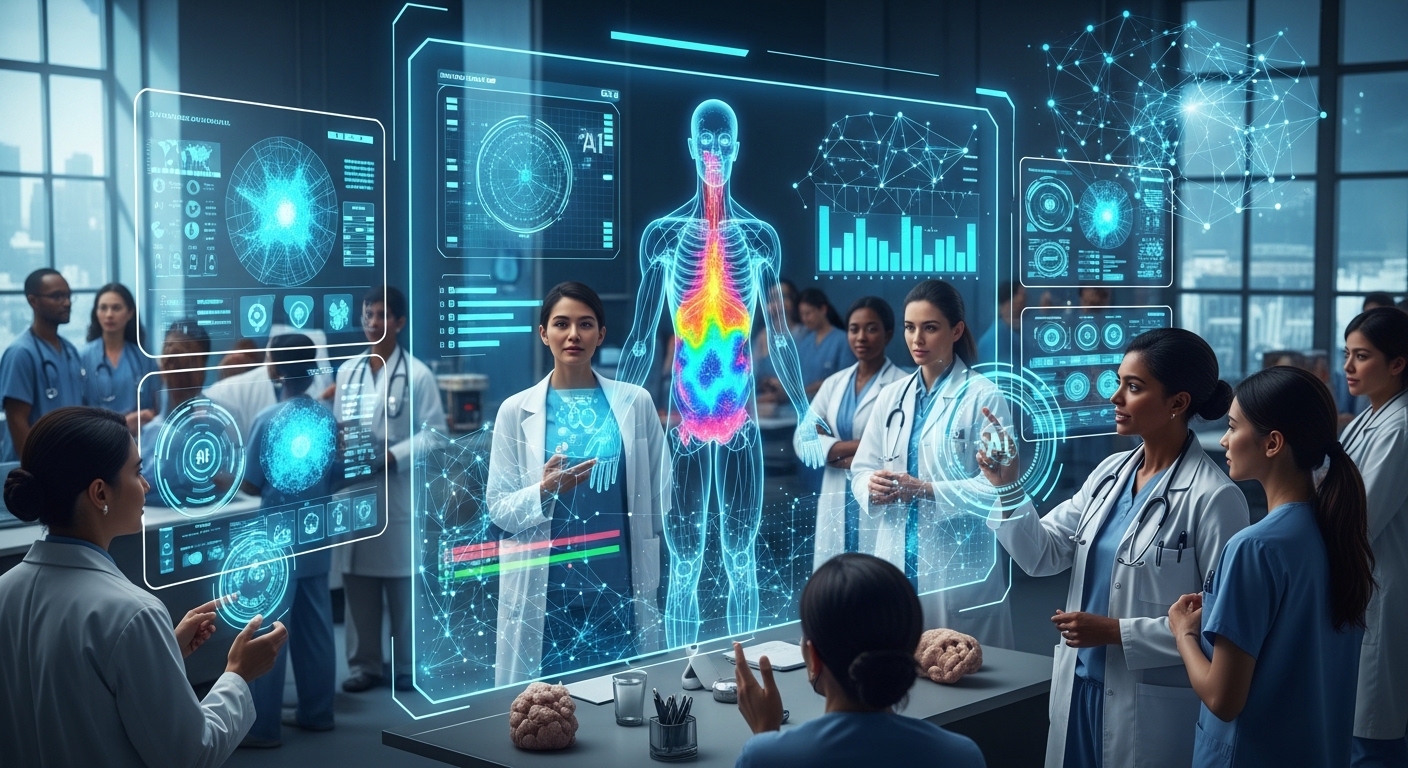
Artificial intelligence is rapidly reshaping healthcare systems across the world by improving diagnosis speed, accuracy, and early disease detection. Hospitals, research institutions, and medical technology companies are increasingly adopting AI powered tools to assist doctors in identifying conditions faster and more precisely, leading to better patient outcomes and more efficient healthcare delivery globally.
AI Driven Medical Innovation
Advanced Diagnostic Imaging Systems
Healthcare technologies developed by IBM are improving medical imaging analysis by detecting abnormalities in X-rays, MRIs, and CT scans with high accuracy. These systems help radiologists identify diseases earlier, reduce diagnostic errors, and support faster clinical decision making in hospitals worldwide.
Machine Learning Disease Detection
Systems developed by Google Health use machine learning to analyze patient data and detect diseases such as cancer and diabetic complications. These tools assist doctors by highlighting risk patterns that may not be visible through traditional diagnostic methods, improving early intervention rates significantly.
AI Assisted Clinical Decision Support
Platforms created by Microsoft support healthcare professionals by providing clinical decision recommendations based on patient history and medical databases. These systems enhance diagnostic accuracy, reduce workload for doctors, and ensure more consistent treatment planning across hospitals and healthcare institutions.
Precision Medicine Technologies
AI systems developed by NVIDIA support precision medicine by analyzing genetic data and predicting patient responses to treatments. This allows doctors to design personalized treatment plans that improve recovery outcomes and reduce side effects in complex medical cases.
Healthcare AI Research Platforms
Research initiatives from OpenAI contribute to medical language models that assist in summarizing patient records and analyzing clinical research data. These tools help researchers and healthcare professionals process large volumes of medical information efficiently.
Transformation of Diagnosis Systems
Faster Disease Identification
AI powered systems significantly reduce the time required to diagnose diseases by analyzing medical data instantly. Hospitals using these technologies can identify critical conditions earlier, allowing faster treatment decisions and improving patient survival rates in emergency situations.
Improved Radiology Accuracy
Radiology departments are using AI tools to enhance image interpretation accuracy. These systems detect subtle patterns in scans that may be missed by human observation, leading to more reliable diagnoses and reduced medical errors.
Early Cancer Detection Systems
AI based diagnostic tools are increasingly used for early cancer detection by analyzing imaging scans and genetic markers. Early identification improves treatment success rates and increases patient survival chances significantly across multiple cancer types.
Predictive Health Monitoring
Healthcare systems now use AI to predict potential health risks based on patient history and lifestyle data. This allows doctors to recommend preventive care strategies before diseases develop into serious conditions.
Reduced Diagnostic Workload
AI systems help reduce the workload of medical professionals by automating repetitive diagnostic tasks. This allows doctors to focus more on patient care and complex medical decision making.
Global Healthcare Impact
Hospital Efficiency Improvements
Hospitals adopting AI systems are experiencing improved operational efficiency through faster diagnosis, reduced waiting times, and better resource management. This leads to smoother patient flow and enhanced healthcare service delivery.
Remote Medical Diagnosis Expansion
AI powered telemedicine platforms enable remote diagnosis services for patients in rural and underserved regions. This improves access to healthcare where medical specialists are not easily available.
Medical Data Analysis Growth
Healthcare organizations are using AI to analyze large volumes of patient data for better treatment planning. This helps identify trends and improve hospital decision making processes.
Drug Development Acceleration
Pharmaceutical companies use AI to speed up drug discovery by analyzing biological data and predicting effective compounds. This reduces research time and development costs significantly.
Global Health Monitoring Systems
AI systems are being used to monitor disease outbreaks and global health trends. These tools help governments and health organizations respond quickly to potential health crises.
Challenges in AI Healthcare Adoption
Data Privacy Concerns
The use of patient data in AI systems raises concerns about privacy and security. Healthcare organizations must ensure strict data protection measures to maintain patient trust.
High Implementation Costs
AI healthcare technologies require significant investment in infrastructure and training, which can be challenging for smaller hospitals and developing regions.
Regulatory Approval Barriers
Medical AI systems must undergo strict regulatory approvals before being used in clinical environments, which can slow down adoption.
Limited Skilled Workforce
There is a shortage of healthcare professionals trained to work with advanced AI systems, limiting widespread adoption in some regions.
Ethical Decision Making Issues
AI systems must be carefully designed to ensure ethical medical decisions, especially in life critical diagnosis situations.
Future of AI in Healthcare
Fully Automated Diagnostic Systems
Future healthcare systems may include fully automated diagnostic tools capable of analyzing patient data without human intervention in certain cases.
AI Doctor Assistance Expansion
Doctors will increasingly rely on AI assistants for real time diagnosis support, treatment recommendations, and patient monitoring.
Wearable Health Monitoring Integration
AI will integrate with wearable devices to continuously monitor patient health and detect early warning signs of diseases.
Personalized Treatment Evolution
AI will enable highly personalized treatment plans based on genetics, lifestyle, and medical history for each patient.
Global Healthcare Accessibility
AI technology is expected to make quality healthcare more accessible worldwide, especially in remote and underserved regions.
How does AI improve medical diagnosis?
AI analyzes medical data quickly and accurately to help doctors detect diseases earlier.
Is AI replacing doctors in healthcare?
No, AI supports doctors by improving accuracy but does not replace human medical expertise.
Can AI detect diseases early?
Yes, AI systems can identify early warning signs from scans and patient data.
What are the main benefits of AI in hospitals?
Faster diagnosis, improved accuracy, reduced workload, and better patient care.
Is AI safe in healthcare systems?
Yes, but it must follow strict regulations and ethical guidelines for safe use.
Artificial intelligence is transforming healthcare diagnosis systems worldwide by making medical processes faster, more accurate, and more efficient. With continued innovation, AI will play a vital role in improving global healthcare access, supporting doctors, and enhancing patient outcomes, ultimately reshaping the future of medical science and healthcare delivery across the world.
